









ADMCC CCTV Regulations: Everything Abu Dhabi Businesses Need to Know
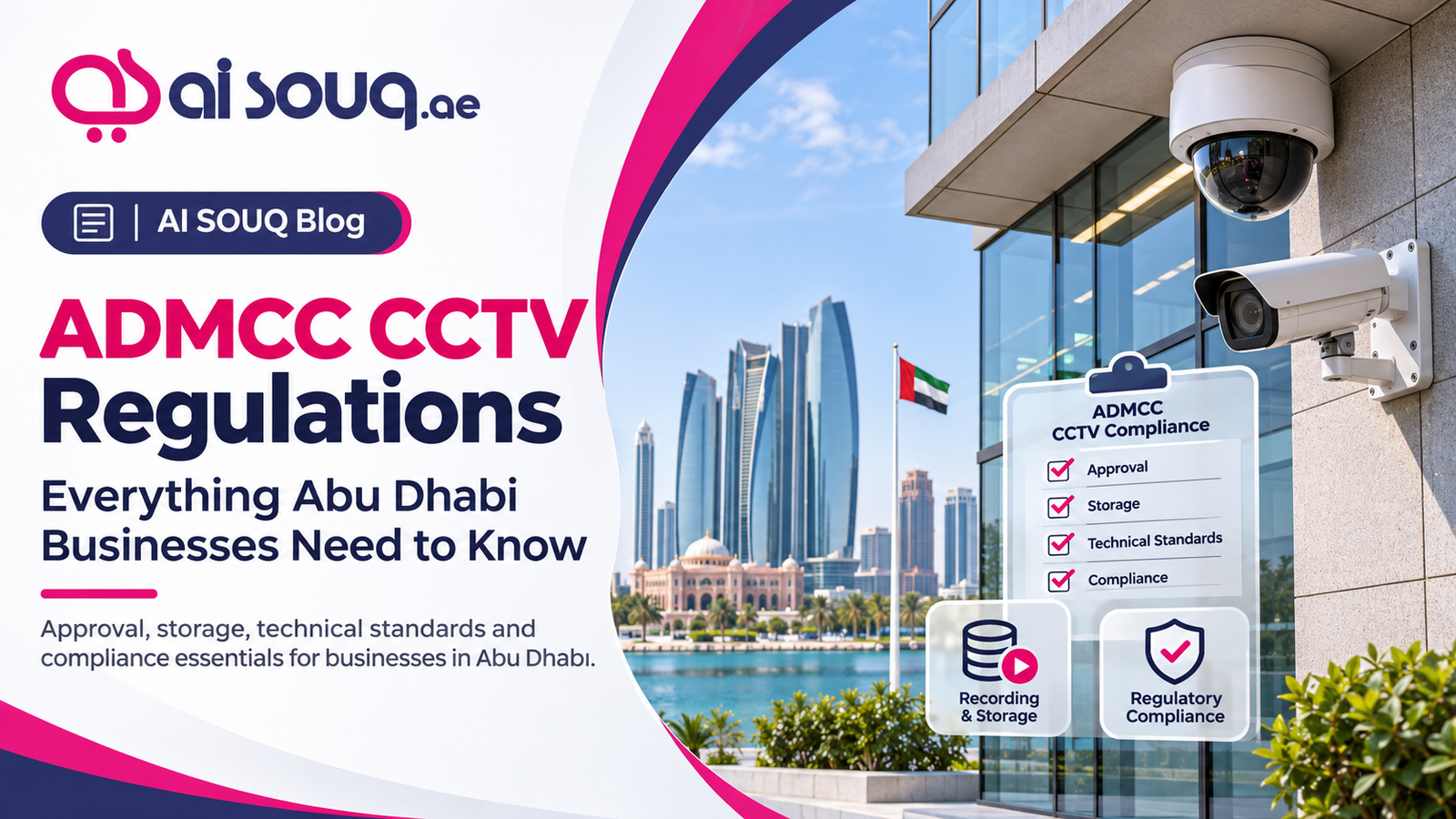
Installing cameras is usually the most visible part of setting up a CCTV system. What receives less attention is how the recordings are stored, whether all required areas are covered and which approvals apply to the installation. For businesses in Abu Dhabi, these details are an important part of regulatory compliance.
For an Abu Dhabi business, installing CCTV is only one part of meeting surveillance requirements. Camera placement, recording capacity, system security and regulatory approvals all need attention before a new system is commissioned. The regulations establish how surveillance systems should capture, store and protect footage.
Understanding these requirements before purchasing equipment can help businesses choose suitable systems and avoid unnecessary modifications later.
What Are ADMCC CCTV Regulations?
The Abu Dhabi Monitoring and Control Centre (MCC), often referred to as ADMCC, oversees surveillance-related activities and compliance requirements in Abu Dhabi.
The National Manual for Surveillance Systems, Version 3.0 (2026) establishes technical and operational standards covering cameras, recording equipment, storage, access controls and maintenance.
Its purpose is to ensure surveillance systems capture usable footage, operate reliably and protect recorded information.
Which Businesses Must Follow These Requirements?
CCTV obligations depend on the facility's regulatory classification. Commercial buildings, hospitals, hotels and educational institutions may have different requirements.
Some categories also require dedicated monitoring rooms, automatic number plate recognition (ANPR) or video analytics.
Before choosing equipment, businesses should confirm their facility category and the surveillance standards applicable to their premises.
CCTV Footage Storage Requirements in Abu Dhabi
Recording retention is an important part of CCTV installation in Abu Dhabi. The 2026 National Manual specifies different storage periods according to facility type.
Facility category | Recording retention |
Healthcare entities | 30 days |
Educational entities | 90 days |
Residential and commercial buildings | 90 days |
Hotels and shopping malls | 180 days |
Banks | 180 days |
These periods reflect the manual's listed categories. Additional requirements or directions from the relevant authorities may apply.
The manual also specifies at least 20% additional spare recording storage.
This matters when selecting equipment. More cameras require additional capacity, while higher recording quality increases storage consumption. Continuous and motion-based recording also have different storage implications, although their use must follow the applicable requirements.
Businesses should therefore calculate storage against the required retention period rather than selecting a recorder based only on its camera capacity.
Technical Standards for CCTV Installation
The 2026 manual sets a minimum camera resolution of 1920 × 1080 pixels. But the level of detail captured also depends on where the camera is installed, what it needs to capture and how far the subject is from it.
Different areas require different levels of image detail.
Surveillance purpose | Minimum image density | Minimum frame rate | |
Identification | 500 pixels/metre | 25 fps | |
Recognition | 125 pixels/metre | 12 fps | |
Observation | 63.5 pixels/metre | 12 fps | |
Detection | 30 pixels/metre | 12 fps |
These figures are based on the manual's coverage requirements, which also provide alternative target-size criteria.
Identification supports identifying individuals, particularly at entrances. Recognition helps distinguish people already observed, while observation captures activities within an area. Detection establishes the presence and general movement of people or objects.
A camera intended for entrance identification therefore needs a different viewing arrangement from one monitoring general movement in a parking area.
How Does ADMCC CCTV Approval Work?
Businesses seeking ADMCC CCTV approval in Abu Dhabi should confirm the applicable requirements before installation.
The process generally involves:
1. Site assessment: Identify the facility category and required surveillance coverage.
2. System design: Prepare camera layouts, recording arrangements and equipment specifications.
3. Approval coordination: Submit the necessary documentation through the applicable MCC procedures.
4. Installation and inspection: Complete the approved work and coordinate any required inspections.
The contractor's licence is another detail businesses should check before proceeding. MCC has different licence classifications for companies undertaking surveillance-related work. Make sure the company you choose is authorised to carry out the type of CCTV installation your premises requires.
The approval route, required documents and processing time may vary depending on the facility and application.
What If CCTV Cameras Are Already Installed?
Consider an office renovating its reception area. An existing camera no longer captures the entrance properly, so management decides to reposition it and add another camera.
Although the change appears minor, it affects the surveillance arrangement.
The 2026 manual requires prior approval before cameras are added or removed. Other modifications should also be checked against the approved system design.
A compliance review is therefore advisable when expanding premises, replacing recording equipment or upgrading an older CCTV installation.
CCTV Privacy and Other Requirements Businesses May Overlook
Surveillance equipment must be positioned and operated responsibly.
The 2026 manual requires visible CCTV notices in Arabic, English and Urdu. It prohibits hidden cameras and restricts audio recording without prior approval.
Wireless cameras also require prior authorisation. Cameras must not capture neighbouring properties or private areas without the necessary approval.
For example, a camera covering a reception entrance should be positioned to capture the required area without unnecessarily recording activities inside an adjacent property.
Recorded footage must also be protected against unauthorised access and extraction.
CCTV Compliance Checklist for Businesses
Before proceeding with commercial CCTV installation in Abu Dhabi, businesses can review five practical questions:
● Has the facility been correctly classified?
● Does the proposed camera layout cover the required areas?
● Is recording capacity sufficient for the applicable retention period?
● Is the contractor appropriately licensed and classified?
● Are technical documentation and maintenance arrangements in place?
For existing installations, businesses should also test older recordings, verify timestamps and check image clarity during different lighting conditions.
A camera displaying live footage does not necessarily mean that its recordings are being stored correctly.
Frequently Asked Questions
How can I check whether a CCTV company is MCC-approved?
Verify its current licence and applicable classification through MCC before assigning the installation or approval work.
Can businesses use cloud storage for CCTV recordings?
Cloud hosting, backup and related surveillance arrangements require prior approval under the 2026 manual. Businesses should not assume that ordinary cloud storage services automatically meet these requirements.
How often should CCTV systems be maintained?
The manual requires applicable facilities to maintain an annual preventive and corrective maintenance contract with an appropriately registered company. Actual servicing arrangements should reflect the system and relevant requirements.
Can existing CCTV cameras be upgraded?
Yes. However, proposed changes should be reviewed against the approved design, and relevant authorisation obtained where required.
Choosing the Right CCTV Installation Partner
A CCTV system should be planned around the actual requirements of the premises, not just the number of cameras needed. The right installation partner can help businesses understand their options, select suitable equipment and coordinate the work according to applicable requirements.
Are you planning a new CCTV installation or considering an upgrade to your existing system?
AI Souq provides CCTV supply and installation services for offices, commercial spaces, villas and homes across the UAE.
Planning a CCTV Installation in Abu Dhabi?
Meeting MCC requirements begins with understanding your facility's surveillance needs. Camera coverage, recording capacity and technical documentation should be considered before installation, not after an inspection identifies problems.
AI SOUQ provides CCTV equipment, installation services and support for existing surveillance systems across the UAE. For businesses in Abu Dhabi, the team can discuss suitable equipment and available compliance-preparation services based on the project's requirements.
Contact AI SOUQ to discuss your new CCTV installation or existing system.
Recent Posts
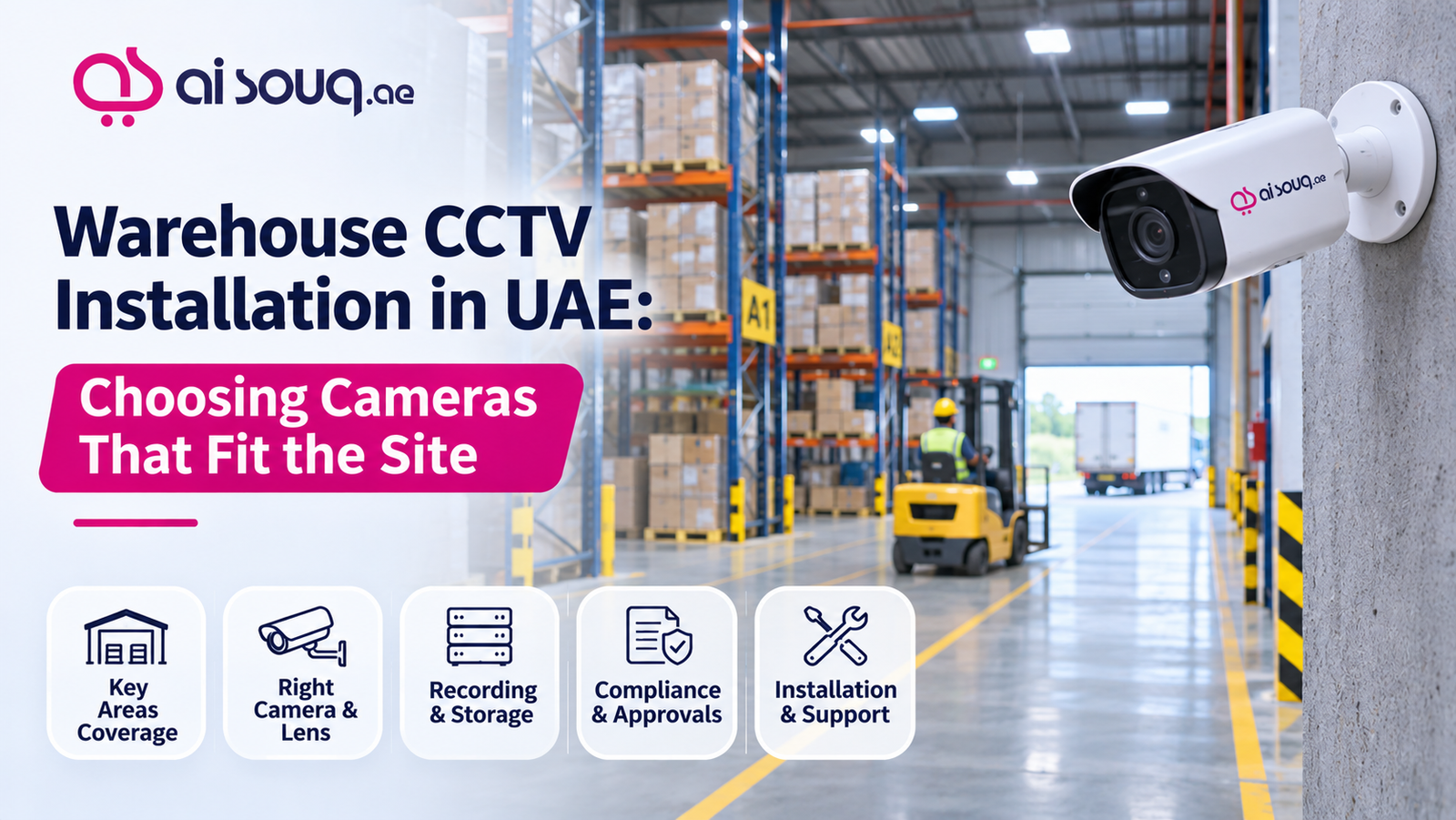
Warehouse CCTV Installation in UAE: Choosing Cameras That Fit the Site
Gate Automation in Dubai: What Affects the Cost, and What Should a Quote Include?
Remote Helpdesk, Managed IT or Virtual IT Department: Which IT Support Plan Does Your Office Need?

Virtual IT Department vs Hiring an In-House IT Person: What Makes Sense for a UAE Business?
CCTV Installation in the UAE: Choose the Right Security System