








Gate Automation in Dubai: What Affects the Cost, and What Should a Quote Include?
The gate itself drives much of the work
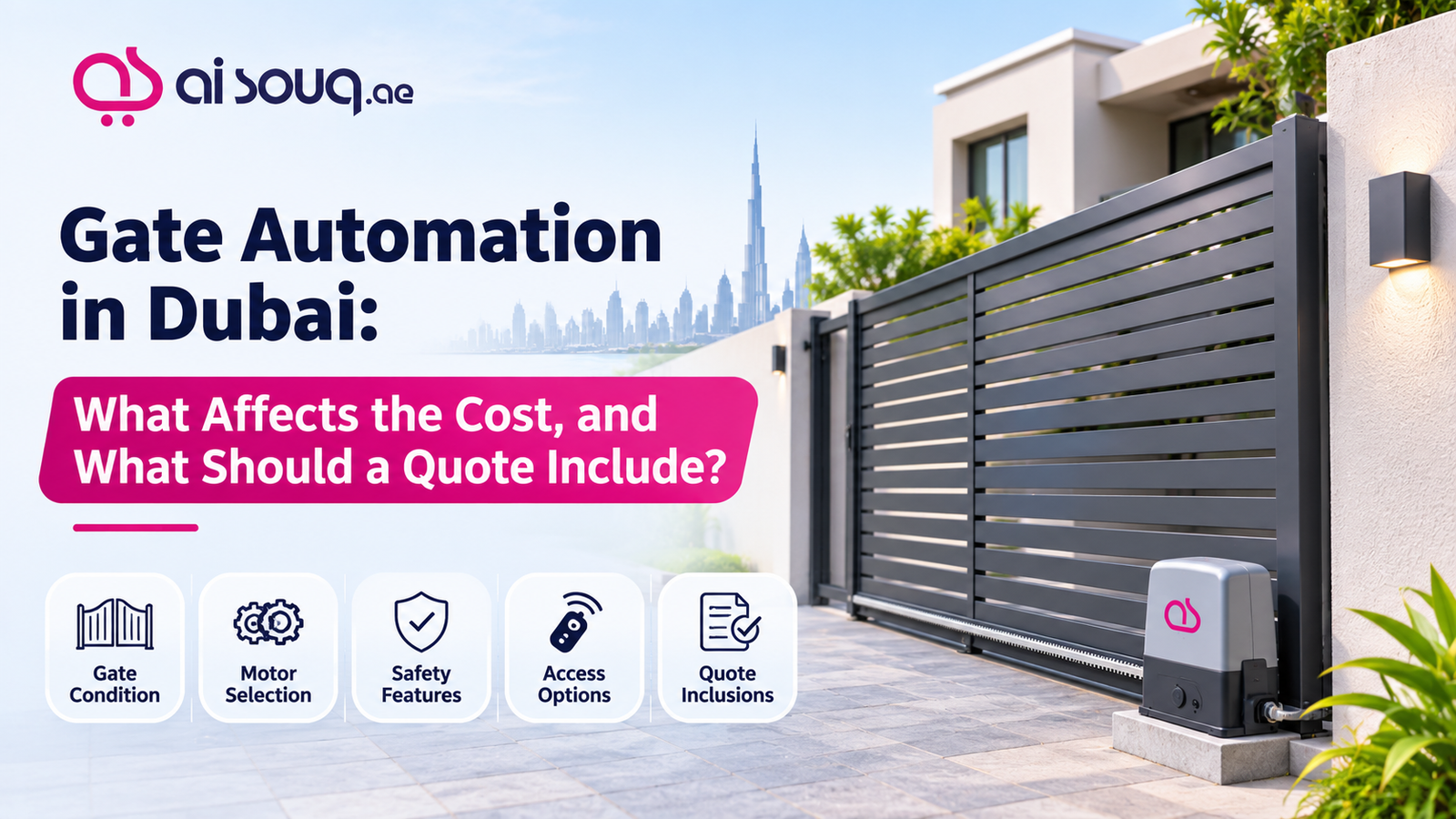
Start with the physical condition of the gate. A sliding gate should travel smoothly along a sound track; a swing gate needs stable hinges and adequate clearance. Motors are not a solution for misalignment, dragging wheels or a sagging leaf. Powering a faulty gate may simply conceal the problem until the drive is damaged.
An installer should inspect dimensions, approximate weight, material, opening direction and how often the gate is expected to operate. Apartment entrances and commercial driveways may see many more cycles than a private villa, so duty rating matters.
Why motor selection changes the price
Sliding gates typically use a drive unit and toothed rack, while swing gates may use articulated-arm, linear or underground operators. The right choice depends on gate geometry and clearance as much as appearance.
A heavier gate may require a more capable operator, but buying the largest motor is not automatically better. The installer should match the system to the gate, its movement and expected daily use. Manufacturer-rated capacity must not replace a physical assessment.
For a villa gate automation project in Dubai, ask why the quoted motor model is suitable. The answer should mention the gate's measured characteristics and available mounting space, not only the brand name.
Site conditions can change the installation scope
Power is a common surprise. Some driveways already have a suitable supply near the gate; others need new conduit, protected cabling or electrical work from a safe connection point. Ground conditions can also require civil work to secure motor foundations, racks, stops or posts.
Access controls add further decisions. Remote handsets may be sufficient for a household. A larger property could require keypad access, video intercom integration or controlled entry for visitors. These functions should appear as separate quotation items when they are optional.
What a complete quotation should show
A quotation need not include every possible accessory. It should, however, identify the safety arrangements required for that installation and make clear who is responsible for supplying them.
Plan for access when the electricity fails
A power cut should not leave residents uncertain about entering or leaving. Ask whether battery backup is appropriate, how the manual release works and where its key will be stored. If the motor is integrated with an intercom, check what still functions when the network is offline. In busy homes, making these arrangements before installation avoids confusion later.
Safety should never be treated as an optional upgrade
Automatic gates create crushing, trapping and impact risks. Safe operation requires a site-specific design, suitable protective devices and correct commissioning. Ask the installer how the system responds to an obstruction, where pedestrians should pass and how the gate can be released during a power failure.
The safety approach also depends on who uses the entrance. Children, delivery drivers, visitors and people unfamiliar with the gate should not have to guess when it will move. A short handover demonstration is worth more than a folder of unused instructions.
Compare quotations on the same basis
One proposal may include track repairs, installation and commissioning. Another may quote only the operator kit. A lower total can therefore represent less work rather than better value.
Request a site survey before approving costly changes. Photograph the existing gate, note nearby power points and share any history of jams or manual difficulty. These details help an installer provide a more realistic scope, although final suitability still needs onsite verification.
Ask who maintains the system after installation
Gate motors need periodic checks of movement, safety devices, mechanical wear and accessible controls. The exact schedule depends on use, environment and manufacturer guidance. Ask how service calls are handled and whether repairs to the gate structure sit outside the motor warranty.
If you are planning automatic gate installation in the UAE, use the quote as a technical document rather than a price tag. AI SOUQ's Access Control Systems page provides a route to discuss automated gates and integrated entry controls; confirm the specific gate-automation scope and available equipment before ordering.
Recent Posts
Warehouse CCTV Installation in UAE: Choosing Cameras That Fit the Site
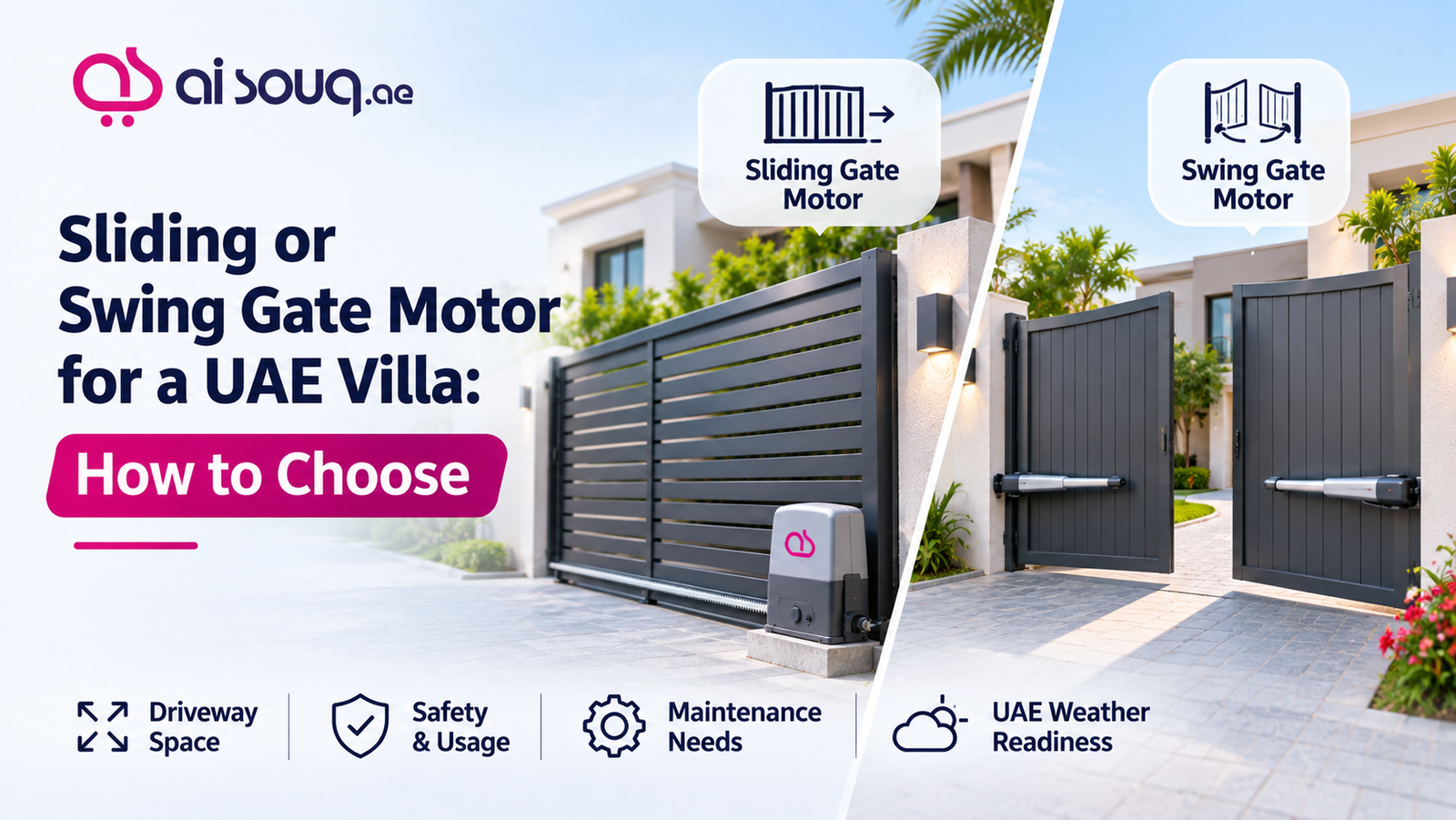
Gate Automation in Dubai: What Affects the Cost, and What Should a Quote Include?
Remote Helpdesk, Managed IT or Virtual IT Department: Which IT Support Plan Does Your Office Need?
Virtual IT Department vs Hiring an In-House IT Person: What Makes Sense for a UAE Business?
CCTV Installation in the UAE: Choose the Right Security System