









Warehouse CCTV Installation in UAE: Choosing Cameras That Fit the Site
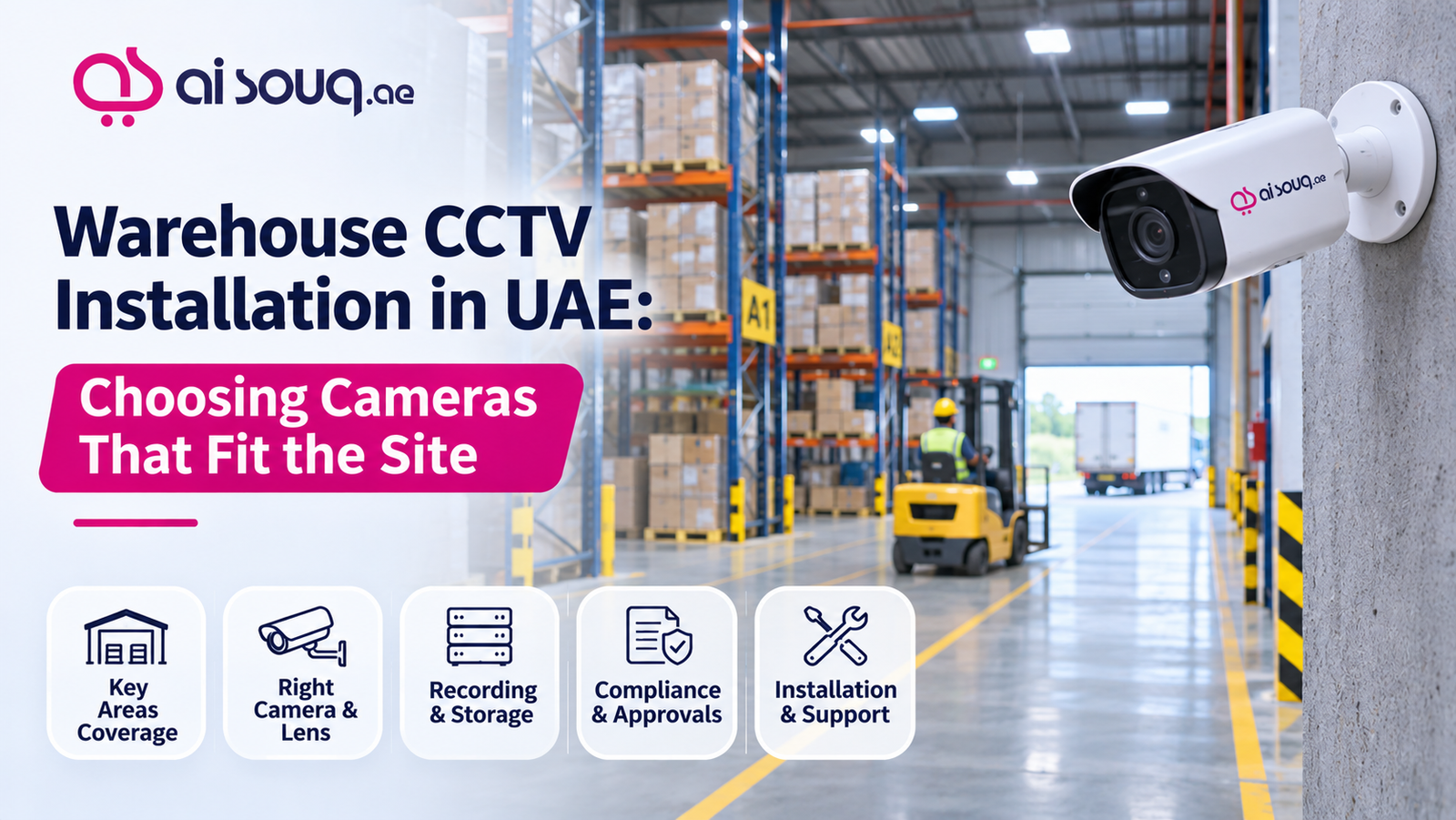
Warehouse cameras have a harder job than many office systems. Forklifts move through long aisles, delivery doors open onto bright yards, and high racking can hide activity from an otherwise impressive wide-angle view. A clear image at one end of the building may be almost useless at the other.
Good warehouse CCTV installation in UAE starts with the decisions your team needs footage to support. Is the priority checking deliveries, reviewing incidents near machinery or confirming who entered a restricted area? Those answers should shape the design long before anyone chooses a camera brand.
Walk the operational route before marking camera positions
Begin at the vehicle entrance and follow the movement of people and goods. Delivery gates, loading docks, picking aisles and dispatch areas each present different viewing distances and risks. A camera that captures a whole loading bay may not show the details needed to examine a disputed handover.
Racking deserves particular attention. High shelves create visual barriers, while changing stock arrangements can introduce new blind spots. For an industrial warehouse in Dubai, the installer should assess the actual aisle widths, shelf heights and equipment movements rather than relying only on an empty floor plan.
Outdoor yards add a different set of conditions: heat, dust, weather exposure and limited lighting. Camera housings and mounting positions need to suit the environment, with views tested after dark where night coverage is important.
Choose the image for the task, not the specification sheet
Megapixels alone do not determine whether a person, package or vehicle can be identified. Lens selection, viewing angle, distance and available light all affect the detail that reaches the recorder. The design should distinguish wide-area observation from closer views at points where identification matters.
Fixed-lens cameras work for predictable scenes. A varifocal lens allows adjustment when the field of view needs careful tuning, while equipment with suitable wide dynamic range can help at loading doors where bright outdoor light meets a darker interior. Warehouse security cameras in Abu Dhabi may require a combination of these capabilities across one site. Do not assume that every camera must be the same model. A coherent design is more important than uniform hardware.
Recording is an infrastructure decision
A large site may require substantial network capacity, protected cable runs, suitable switching equipment and a recorder capable of handling the selected streams. Storage calculations should account for resolution, frame rate, recording schedules and the required retention period.
Power arrangements also matter. If a network switch or recorder fails, several cameras may stop recording at once. For UAE logistics facility CCTV systems, discuss equipment location, environmental protection and any backup-power requirements with the designer.
Remote viewing should be configured with controlled access rather than exposing recording equipment unnecessarily to the public internet. Decide which staff members need live views, playback or footage-export permissions, then document those roles at handover.
Do not leave compliance until the end
Security requirements vary by emirate, facility category and business activity. A warehouse subject to SIRA rules in Dubai may have a different approval path from a relevant site in Abu Dhabi under Monitoring and Control Centre requirements. Selling a camera in the UAE does not establish that a completed installation will be accepted by the authority.
Before committing to a commercial warehouse camera installation, confirm whether an authorised designer, specific documentation or formal review is required. This is particularly important when a new loading area or building extension changes the monitored layout.
What a serious installation proposal should include
A useful proposal lets you trace the design back to operational needs. Ask the provider to show the proposed camera positions and explain why each is needed.
It should identify:
• Camera and lens types, including expected viewing distances.
• Recorder capacity, storage assumptions and network requirements.
• Cabling routes, mounting heights and any access equipment.
• Commissioning tests, handover training and maintenance exclusions.
For warehouse CCTV services in Sharjah or elsewhere in the Emirates, compare quotations against the same coverage plan. A lower price is difficult to assess when one offer omits the difficult roof work or the storage needed for useful playback.
Test the system as a warehouse team would use it
Before handover, check selected views while normal activities are taking place. Can staff find and export a recording from the loading bay? Are timestamps correct? Does the image remain useful when a delivery door opens or a forklift passes?
Build for the warehouse you operate
AI SOUQ provides commercial CCTV installation and configuration options. If you are planning a warehouse surveillance project in the UAE, share your site layout, key activity areas and recording needs with the team.
Ask for a coverage-led proposal, clear exclusions and the appropriate compliance route before approving installation.
Recent Posts
Warehouse CCTV Installation in UAE: Choosing Cameras That Fit the Site
Gate Automation in Dubai: What Affects the Cost, and What Should a Quote Include?
Remote Helpdesk, Managed IT or Virtual IT Department: Which IT Support Plan Does Your Office Need?

Virtual IT Department vs Hiring an In-House IT Person: What Makes Sense for a UAE Business?
CCTV Installation in the UAE: Choose the Right Security System