









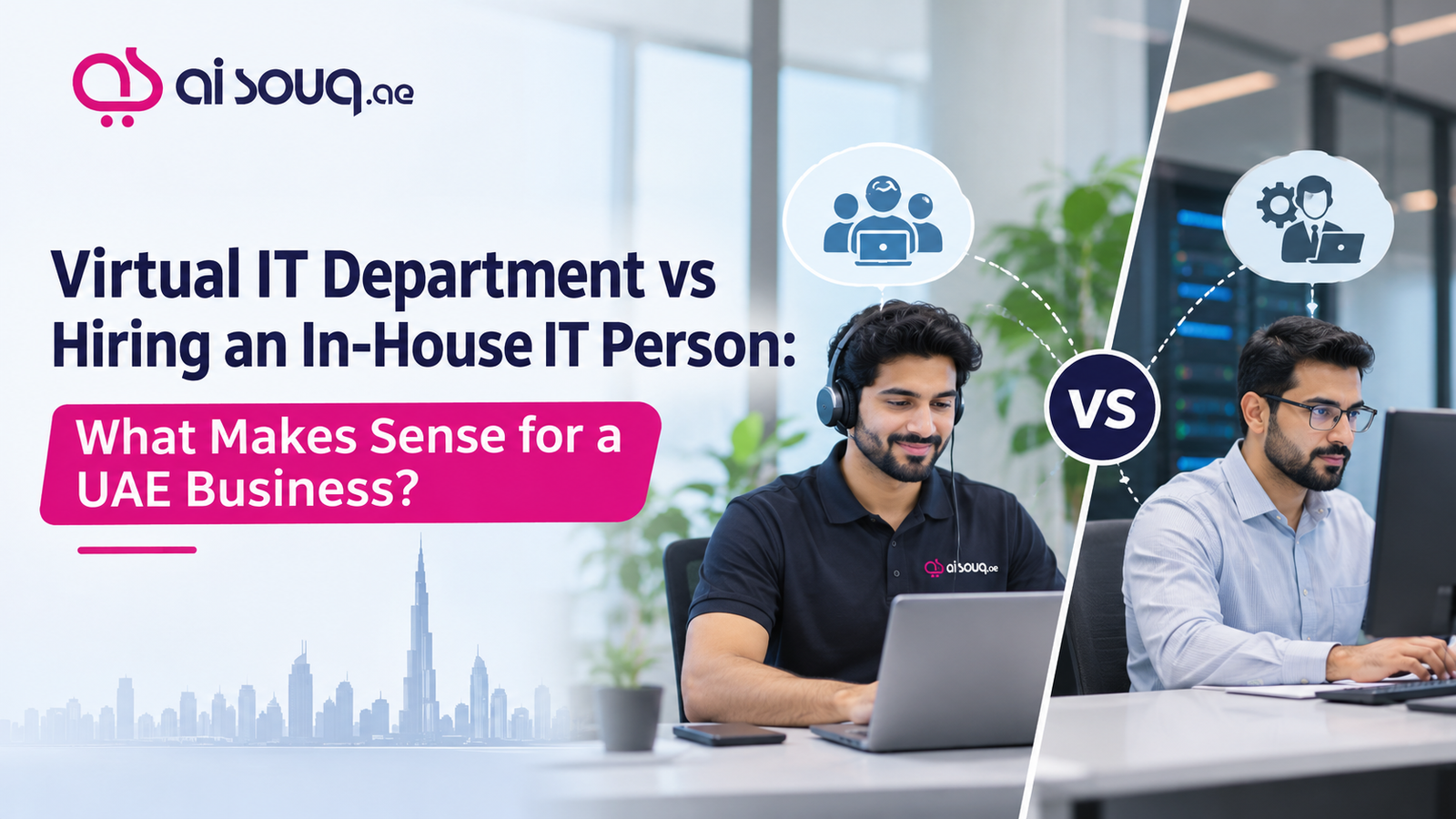
Virtual IT Department vs Hiring an In-House IT Person: What Makes Sense for a UAE Business?
What an in-house IT employee actually gives you
A capable internal IT professional knows the office, its people and its habits. They can watch recurring problems develop, prepare equipment for new starters and step into a meeting room when a presentation fails. That familiarity matters in workplaces where technology changes every day.
It also creates a dependency. One person cannot have deep expertise in every network, cloud platform, security product and business application. Holidays, sickness and competing priorities can leave important work uncovered. A company hiring its first IT employee should therefore consider escalation arrangements, documentation and what happens after office hours.
How a virtual IT department works
Instead of employing one generalist, a business contracts an external team to handle defined support responsibilities. The team may cover employee devices, network faults, Wi-Fi, basic cybersecurity administration and scheduled site visits. The scope is set by the agreement, not by the phrase “virtual department”.
For example, AI SOUQ lists a Virtual IT Department service for businesses with up to 50 employees. Its published package includes remote support hours, planned onsite visits and emergency-visit allowances, alongside support for office devices and selected security systems. These inclusions are a useful starting point for a conversation, but the business should confirm coverage, exclusions and service hours before purchase.
The comparison goes beyond payroll
An employee's cost includes recruitment, visa and employment costs where relevant, benefits, tools, training and ongoing management. Outsourced support usually turns much of that into a defined service expense, although additional visits, projects or equipment may still be charged separately.
Neither model automatically offers faster recovery. A good internal engineer may fix a local printer immediately; a well-organized external team may resolve a complex network fault more quickly. Response commitments should be written down, especially for systems that affect customers or revenue.
When hiring internally makes more sense
Consider an employee when staff needs frequent desk-side support, equipment is regularly moved or rebuilt, or the organization has specialist systems that require constant attention. A busy warehouse with scanners, printers and several operational shifts might justify a dedicated technician even if its headcount is modest.
An internal role is also valuable when technology projects need a day-to-day owner who can coordinate departments, approve changes and maintain standards. That person does not have to carry every technical task alone; outside specialists can still support them.
When outsourced IT support can be the stronger fit
For a professional office with stable equipment, occasional onsite needs and no dedicated technology manager, outsourced IT support in Dubai can provide wider technical coverage without building a full department. Multi-location companies may also benefit from one service arrangement, provided response coverage is confirmed for each site.
The handover is critical. Before support begins, document the internet provider, network devices, software subscriptions, administrator access, backups and previous faults. Keep privileged accounts under the company's control and establish a clear approval process for changes.
A practical way to decide
Review three months of support requests, even if they currently reach an office manager through WhatsApp. Record what went wrong, how long work stopped and whether an on-site visit was genuinely necessary. This will expose whether the business needs a person physically present or a reliable route to specialist help.
Ask potential providers who owns the documentation, how urgent tickets are escalated, what happens outside agreed hours and how support is transferred if the contract ends. An inexpensive plan can become costly when these details are unclear.
The best choice may be a combination
A growing company can appoint an internal IT coordinator and use an external technical team for network administration, infrastructure work and escalations. This gives employees a familiar point of contact without asking one person to know everything.
If you are reviewing business IT support in the UAE, map your actual support demand first. AI SOUQ's Business IT Solutions page provides a starting point for discussing remote assistance, onsite support and infrastructure needs. The objective is not to buy the largest plan; it is to make the right help available when the business needs it.
Recent Posts
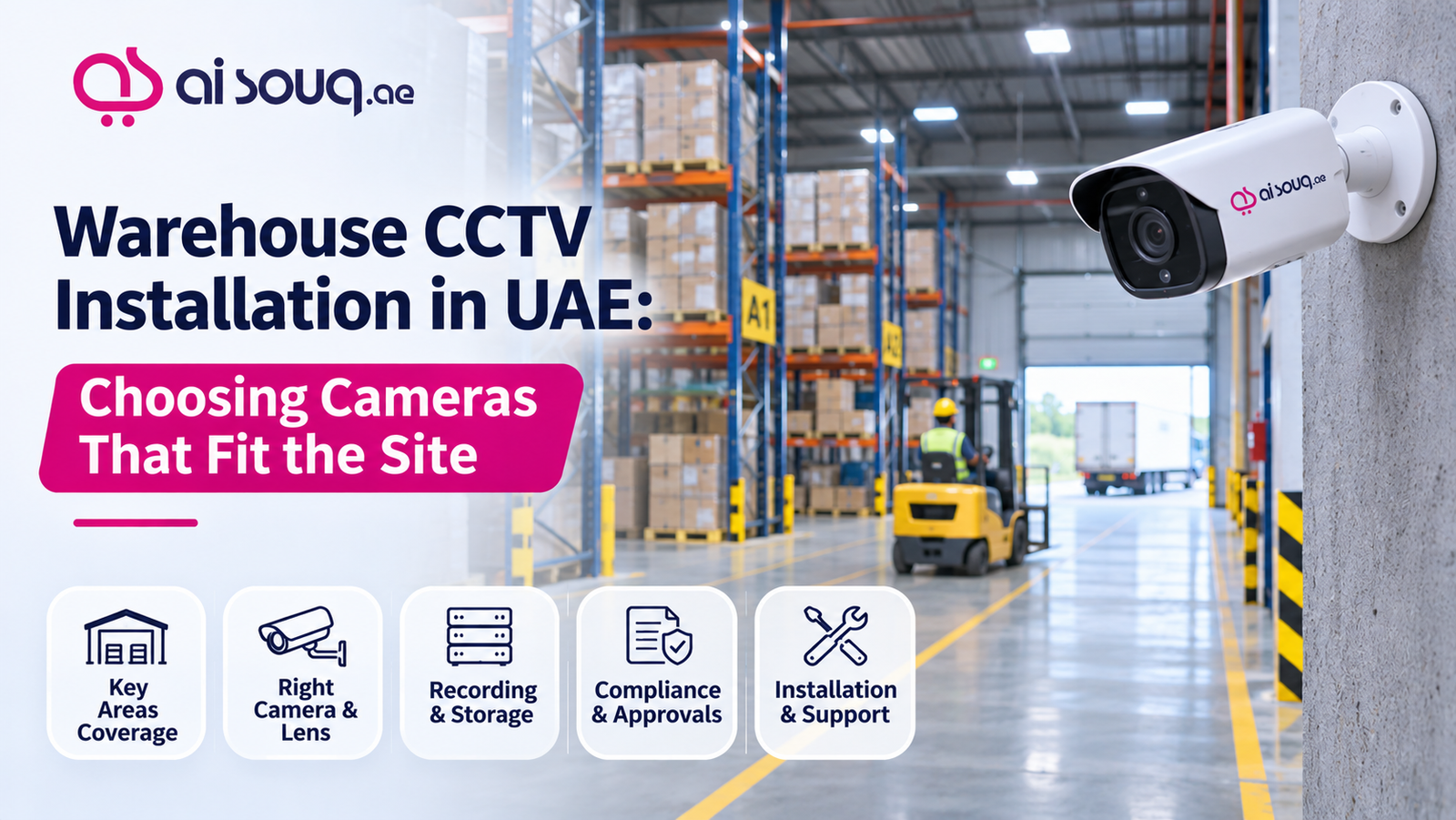
Warehouse CCTV Installation in UAE: Choosing Cameras That Fit the Site
Gate Automation in Dubai: What Affects the Cost, and What Should a Quote Include?
Remote Helpdesk, Managed IT or Virtual IT Department: Which IT Support Plan Does Your Office Need?
Virtual IT Department vs Hiring an In-House IT Person: What Makes Sense for a UAE Business?

CCTV Installation in the UAE: Choose the Right Security System